SEO
Google Ads Landing Page SEO Checklist
A practical Google Ads landing page checklist covering message match, mobile speed, trust, tracking, forms, and SEO-friendly structure.
By Tayyiba Suleman - Published July 28, 2026 - Updated July 28, 2026 - 3 min read
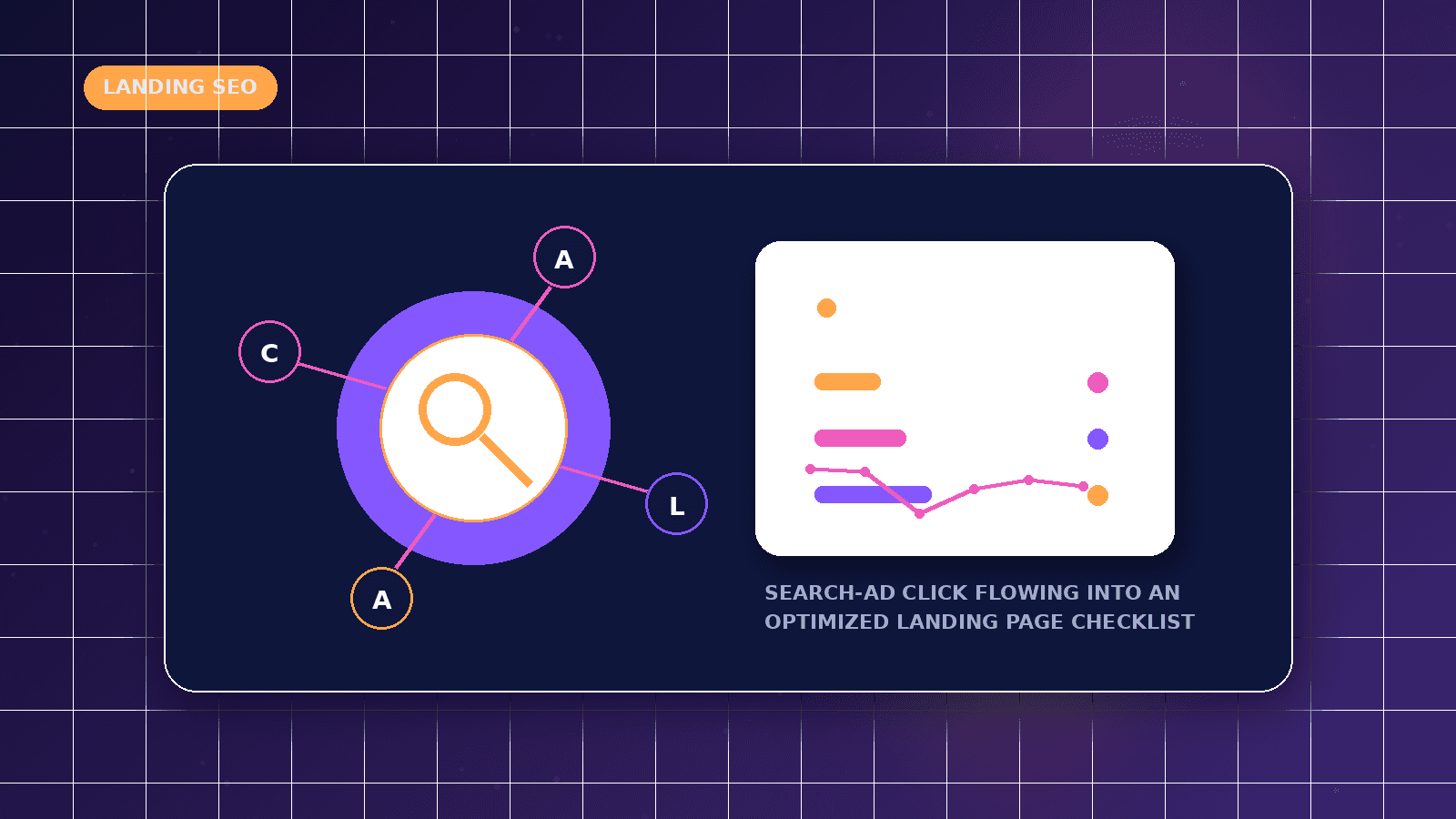
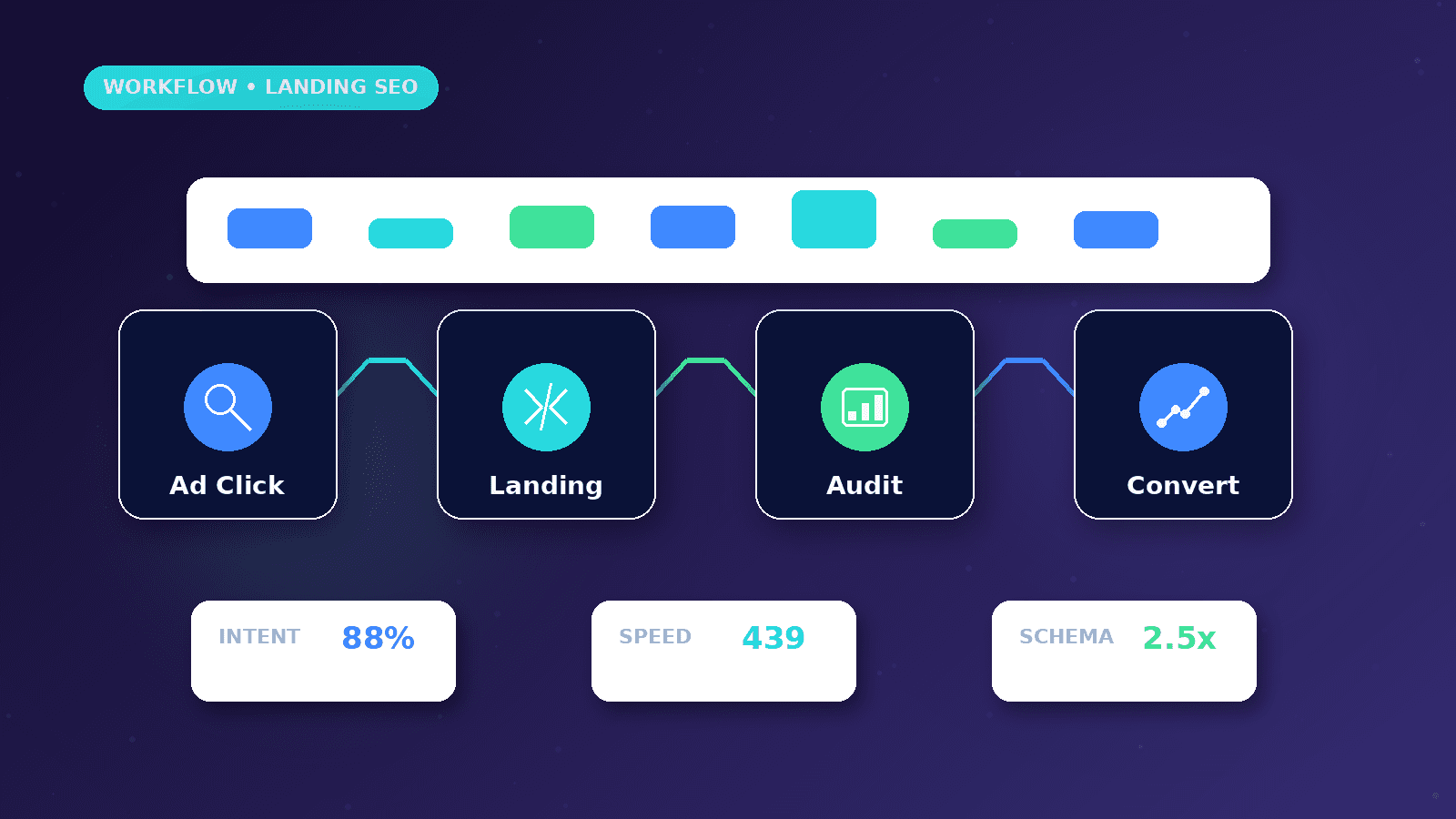
A Google Ads landing page should match the search intent, load quickly on mobile, explain the offer clearly, and make conversion tracking reliable. SEO still matters because page structure, speed, content clarity, internal links, and trust signals influence user experience and long-term search performance.
Reader outcome: Improve Google Ads landing pages before spending more budget. This article is educational, uses safe CurrentReach AI-owned visuals, and labels illustrative examples where they appear.
How this guide was prepared
This article is written for CurrentReach AI readers using service-planning experience, website implementation patterns, SEO checks, automation workflow review, and practical measurement considerations. It is not copied from a third-party report or generated from private account data.
Focuses on crawlability, intent, internal links, technical quality and Search Console review.
Avoids ranking guarantees and keyword-stuffing advice.
Connects visibility work with useful pages and qualified lead measurement.
Message match and search intent
The ad keyword, ad copy, landing page headline, service description, and CTA should describe the same offer.
A visitor searching for website development, SEO services, AI automation, or lead generation should not land on a vague homepage with no clear next step.
Use one primary action such as request a strategy call, book a demo, call, or WhatsApp message.
Mobile landing page experience
Most paid traffic should be checked on mobile first because small text, slow loading, or crowded forms can waste ad spend.
Compress images, reserve space for media, avoid layout shifts, and keep the first screen focused on the offer.
Make tap targets comfortable and keep WhatsApp, phone, and form actions easy to find without covering content.
Trust and conversion copy
Show who provides the service, what the process looks like, what happens after submission, and what claims are realistic.
Avoid unsupported guarantees such as guaranteed rankings, guaranteed leads, or instant revenue.
Use proof, portfolio context, policies, FAQs, and founder information where available.
Tracking and attribution
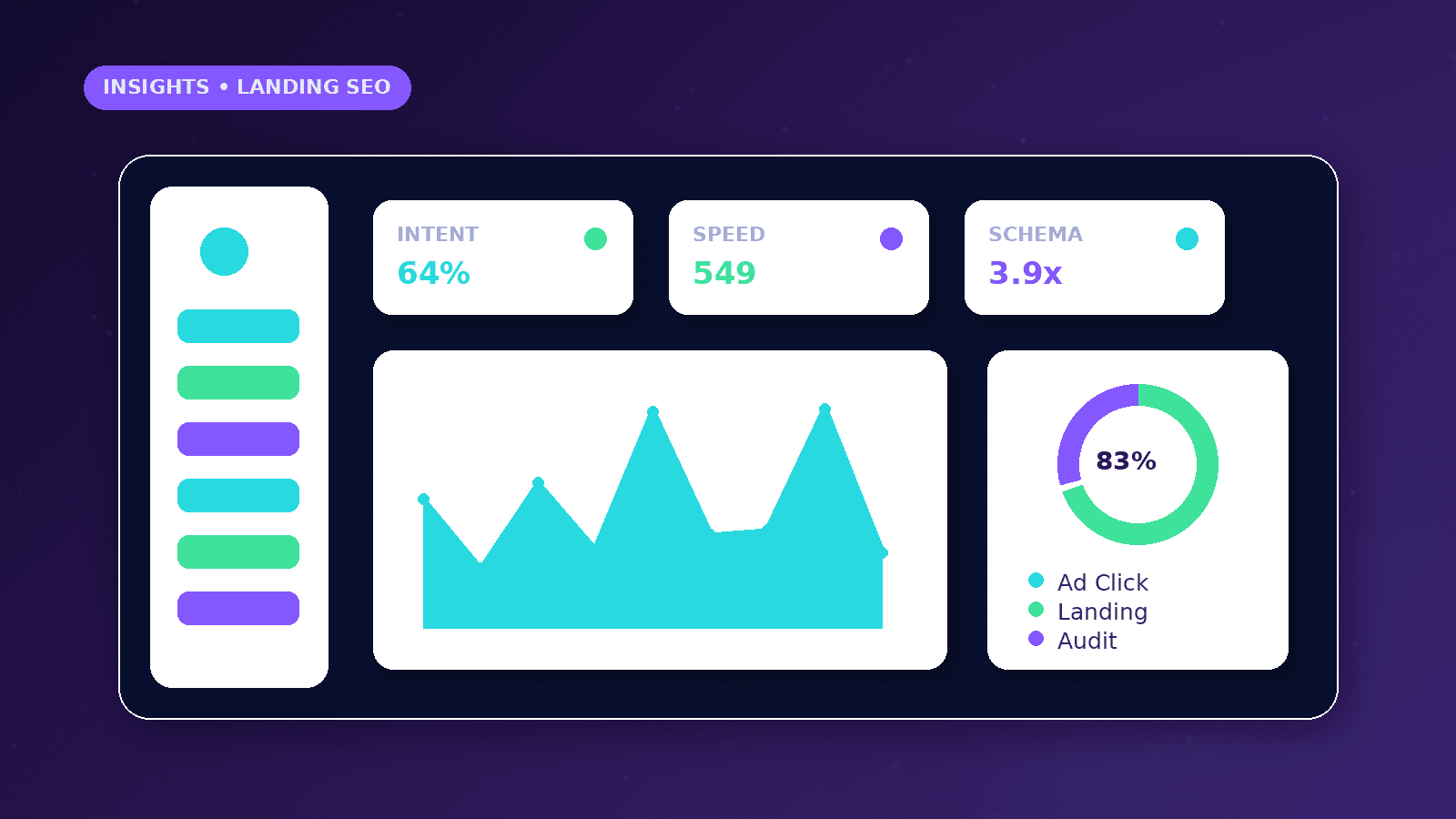
Configure GA4 events such as generate_lead, whatsapp_click, phone_click, email_click, and booking actions where appropriate.
Capture UTM parameters, gclid, gbraid, and wbraid so ad clicks can be connected with real inquiries.
The form should only fire lead conversion after the server confirms the lead was received and notification handling succeeded.
SEO-friendly structure
Use a clear title tag, meta description, H1, service-focused sections, internal links, and FAQ content that matches real customer questions.
Do not hide important copy behind heavy JavaScript or decorative animation.
Keep canonical URLs on the production domain, not preview or staging URLs.
Practical checklist
- Keyword intent
- Headline match
- Mobile speed
- Clear CTA
- Trust signals
- Short form
- Lead tracking
- UTM capture
- Thank-you page
- Follow-up workflow
Image sources
- google-ads-landing-page-seo-checklist/featured-image.png: Original CurrentReach AI blog image pack. License: Owned generated visual. No private data present.
FAQs
Should a Google Ads landing page be indexed?
It depends. Evergreen service landing pages can be indexable, while temporary test pages may be noindexed if they are thin or campaign-only.
What is the most important landing page metric?
Qualified lead quality matters more than raw clicks or form submissions.
Can SEO reduce Google Ads cost?
SEO does not directly control ad cost, but better relevance, speed, trust, and message match can support better landing-page performance.
Need help applying this?
Need practical help with SEO Services? CurrentReach AI can help scope the work, implement carefully and measure what changes after launch.
Related guides
About the author
Tayyiba Suleman is Web Developer and Automation Developer. Articles are reviewed against the Editorial Policy and should be read with the Content Disclaimer.