Social Media Marketing
How to Write Better Short-Form Video Hooks
How businesses can write clearer hooks for reels, shorts, TikTok videos, and social clips without exaggeration.
By Tayyiba Suleman - Published July 16, 2026 - Updated July 19, 2026 - 4 min read
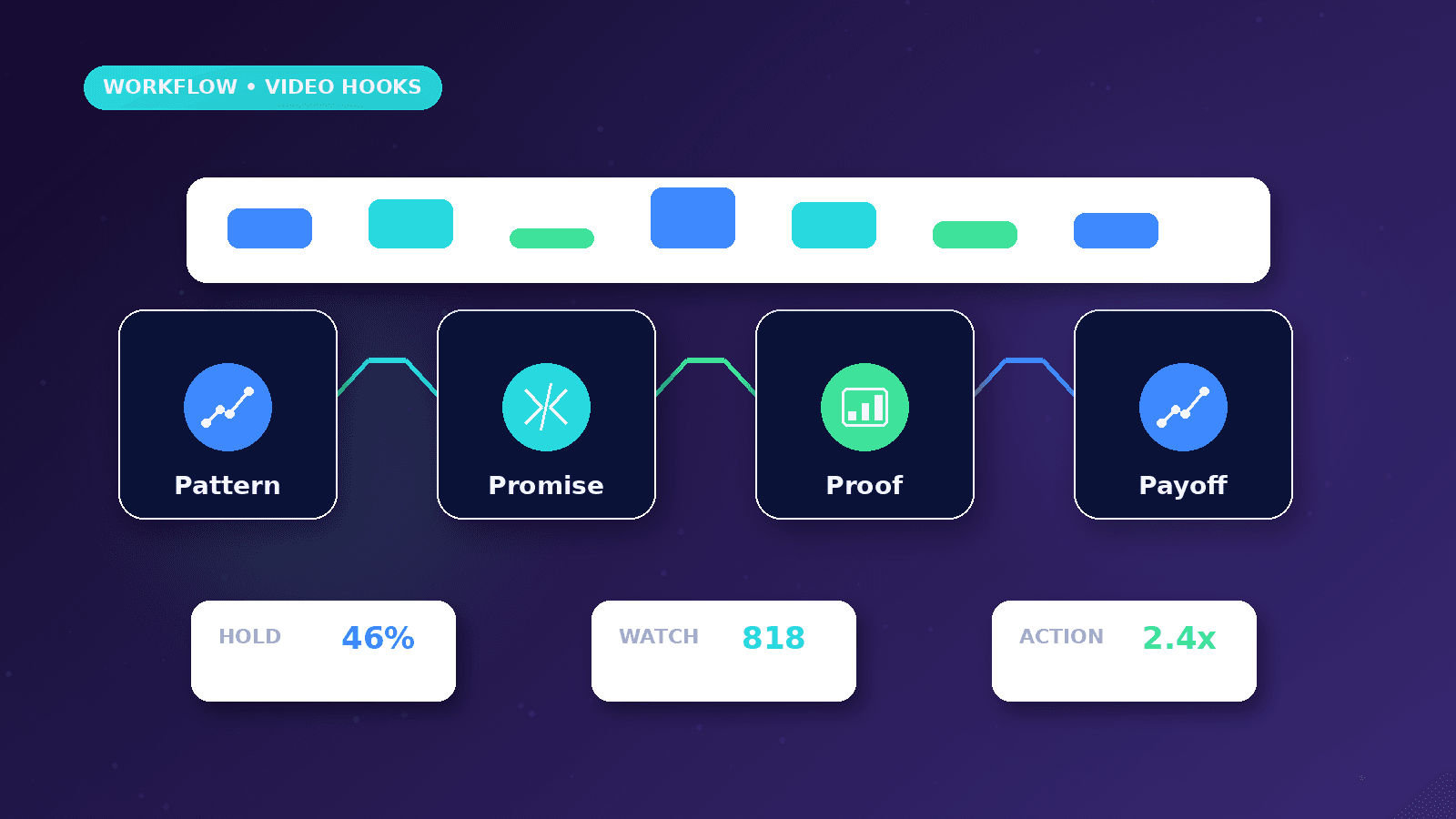
A short-form hook should earn attention honestly by naming a real problem, mistake, question, or useful outcome. Strong hooks fit the audience and offer without relying on fake urgency or exaggerated claims.
Reader outcome: Improve short-form hooks. This article is educational, uses safe CurrentReach AI-owned visuals, and labels illustrative examples where they appear.
How this guide was prepared
This article is written for CurrentReach AI readers using service-planning experience, website implementation patterns, SEO checks, automation workflow review, and practical measurement considerations. It is not copied from a third-party report or generated from private account data.
Connects content planning with audience, campaigns, CTAs and CRM follow-up.
Separates engagement metrics from real business outcomes.
Avoids viral-growth promises and unsupported performance claims.
What a hook should do
A hook should make the right viewer understand why the video matters.
It should be specific, truthful, and connected to the topic.
Avoid fake urgency and misleading claims.
Hook formats
Problem-first: name the pain point.
Mistake-first: explain a common error.
Checklist-first: promise practical steps.
Comparison-first: compare two choices.
Testing hooks
Test different opening lines, visuals, captions, and thumbnails.
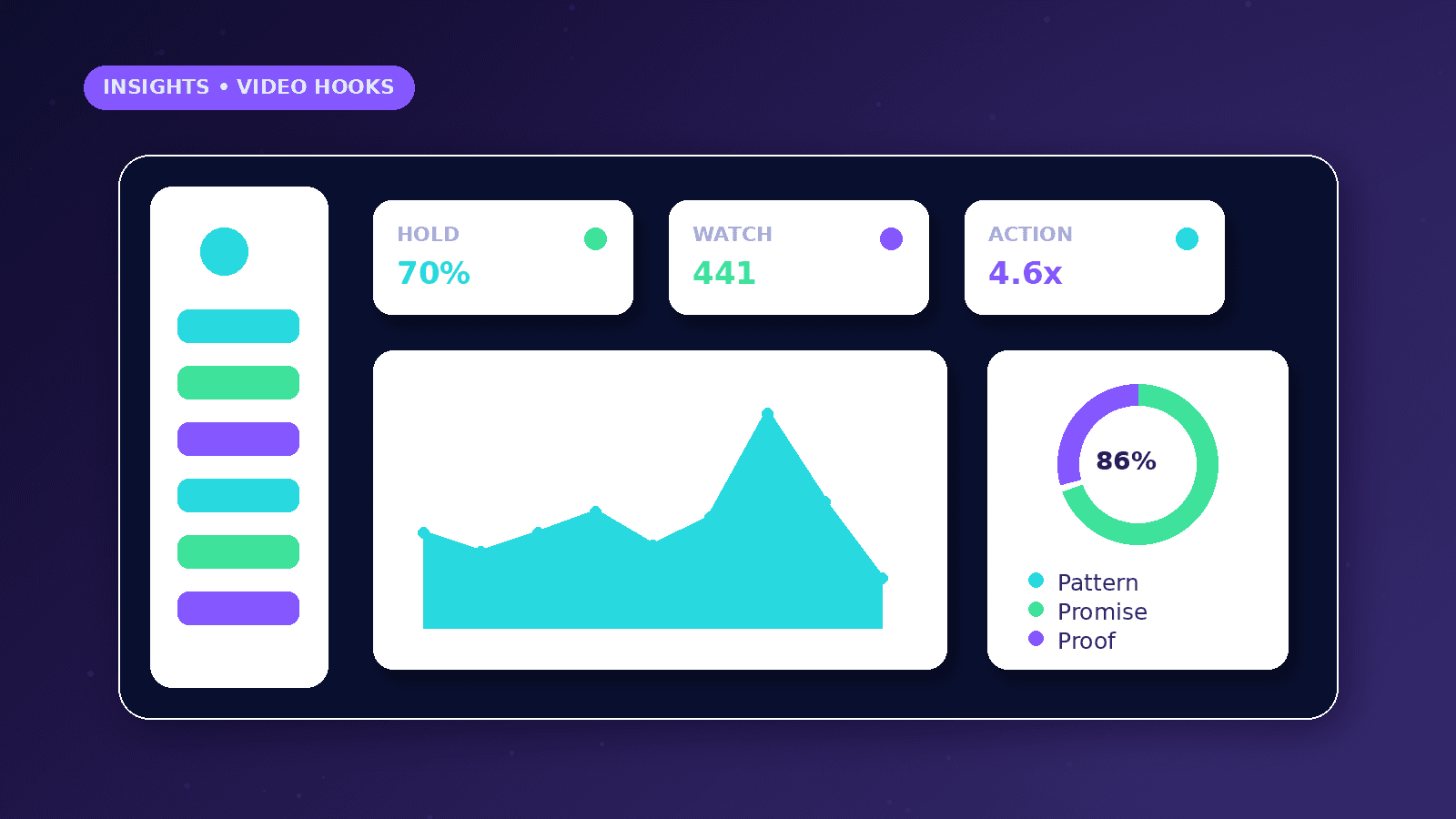
Measure watch time, saves, clicks, and comments, not only views.
Hook types that work
Problem hooks name a pain the audience already recognizes.
Mistake hooks point out a common error without shaming the viewer.
Comparison hooks help people choose between two options.
Process hooks show what happens behind the scenes or step by step.
Practical example
For a web development service, a useful hook might be: "Your homepage may be losing leads before visitors reach the form." It names a specific issue without promising a fake result.
For social media planning, a useful hook might be: "Stop planning posts before you know the content pillar." It leads naturally into education.
For automation, a useful hook might be: "Automate the reminder, not the risky customer promise." It makes the safety point clear.
CTA alignment
Match the hook to the next step. Educational videos can ask people to save, read a guide, or comment with a question.
Offer-focused videos can point to a service page, WhatsApp message, or consultation request.
Do not use a dramatic hook if the content cannot satisfy it.
Common mistakes
Copying trending hooks without matching the audience feels generic.
Making claims that cannot be verified can harm trust.
Changing the hook but keeping the same weak content will not fix retention.
Hook development workflow
Start with one viewer problem, not a vague topic. A hook should make the viewer understand why the next few seconds matter.
Write several versions: direct problem, common mistake, comparison, checklist, behind-the-scenes, and objection-answer hook.
Match the hook to the format. A reel hook, carousel first slide, and caption opening may need different wording.
Avoid claims that cannot be supported inside the content.
Test hooks by retention, saves, comments, profile actions, and qualified clicks, not only views.
Keep a swipe file of approved hook patterns so the brand can move faster without copying competitors.
Examples by business goal
For awareness, use hooks that name common problems and invite the viewer into a useful explanation.
For trust, use hooks that show process, decision criteria, mistakes, or behind-the-scenes work.
For conversion, use hooks that connect a specific pain to a service page, guide, WhatsApp message, or consultation request.
For retention, turn customer questions into recurring hook formats.
For paid creative testing, keep the hook aligned with the landing page promise.
For educational posts, make sure the content actually delivers the answer promised by the opening line.
What good looks like
A good hook makes the right viewer understand the value of watching without exaggeration.
The rest of the video should deliver on the hook quickly with examples, steps, proof, or a clear explanation.
The CTA should match the viewer stage: save, comment, read, message, book, or compare options.
Reporting should look beyond views and include retention, saves, comments, clicks, and lead quality where configured.
When to get help
Get help when content ideas are inconsistent, hooks feel generic, or videos attract attention from the wrong audience.
Social strategy support can turn business objectives into pillars, hooks, formats, captions, and CTAs.
Paid creative support is useful when short-form videos will be tested as ad assets.
Reporting help can connect hook performance with meaningful business outcomes instead of vanity metrics alone.
Practical checklist
- Audience defined
- Problem named
- Claim safe
- First line concise
- Content matches hook
- CTA aligned
- Results reviewed
Image sources
- write-better-short-form-video-hooks/featured-image.png: Original CurrentReach AI blog image pack. License: Owned generated visual. No private data present.
FAQs
How long should a short-form hook be?
It should be as short as possible while making the reason to watch clear, often one direct sentence.
Should hooks be controversial?
Only when the point is honest and useful. Forced controversy can attract the wrong attention.
How should hooks be tested?
Compare retention, saves, comments, clicks, and whether the content attracts the right audience.
Need help applying this?
Need better post hooks, content pillars, and campaign planning? Explore CurrentReach AI Social Media Marketing Services.
Related guides
About the author
Tayyiba Suleman is Web Developer and Automation Developer. Articles are reviewed against the Editorial Policy and should be read with the Content Disclaimer.