Sales Analytics
AI Sales Funnel Dashboard Metrics: Track Leads, Emails, Replies, Calls, and Revenue
July 15, 2026 - 8 min read

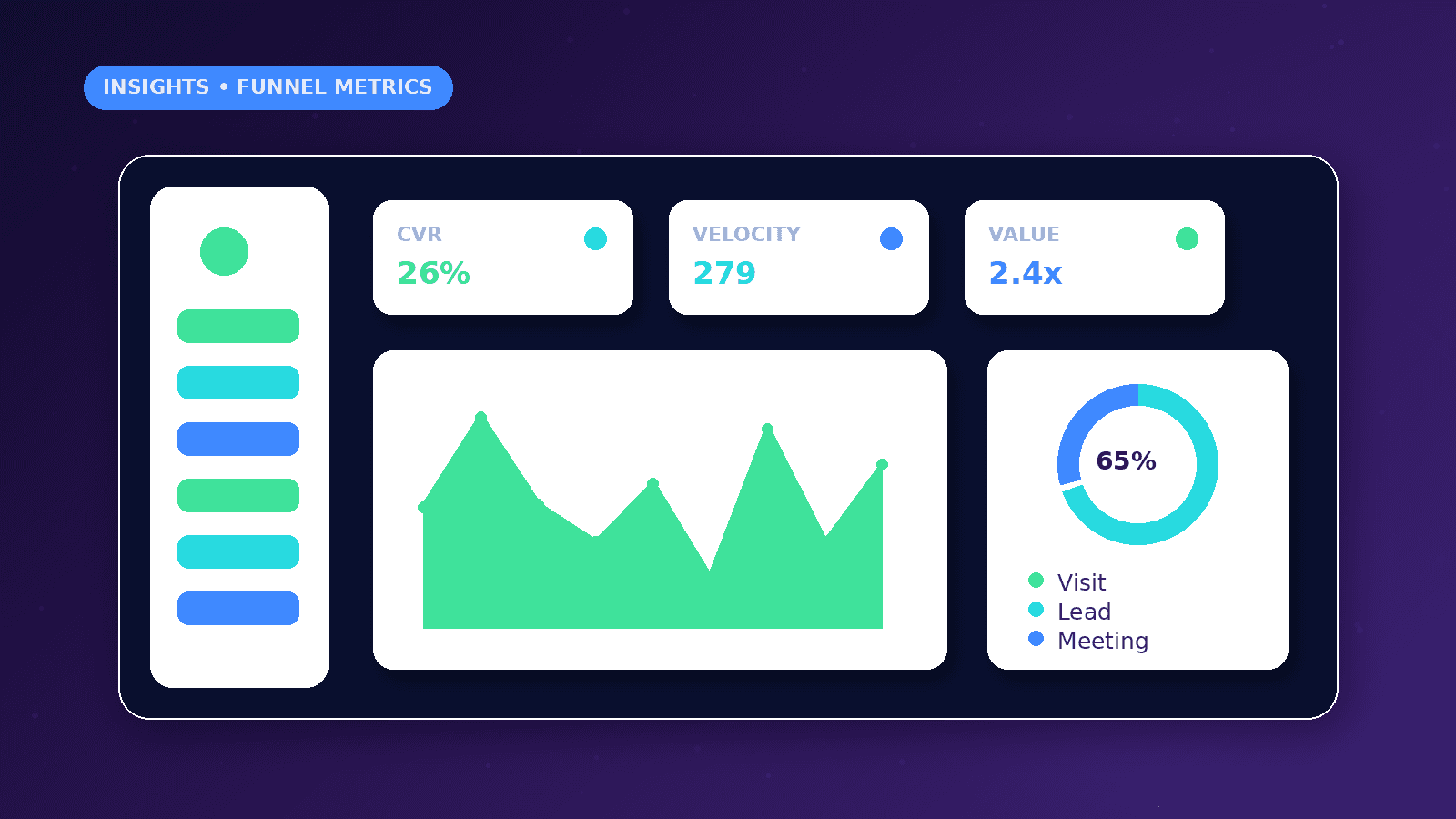
An AI sales funnel dashboard should make decisions easier. It should not only show pretty charts. It should explain where leads come from, which campaigns are active, how many emails were sent, who replied, which prospects are warm, and which conversations became booked calls.
The first metric is lead source. Website forms, SEO, referrals, directories, cold outreach, paid ads, and social traffic should be separated. This helps the business know which channels deserve more attention.
The second metric is outreach activity. Emails sent, follow-ups scheduled, failed sends, and campaign status help the team understand execution quality. High activity without replies may signal weak targeting or messaging.
The third metric is response quality. Reply rate, positive replies, warm leads, hot leads, and booked calls matter more than raw send volume. A smaller campaign with better fit can outperform a larger campaign with weak targeting.
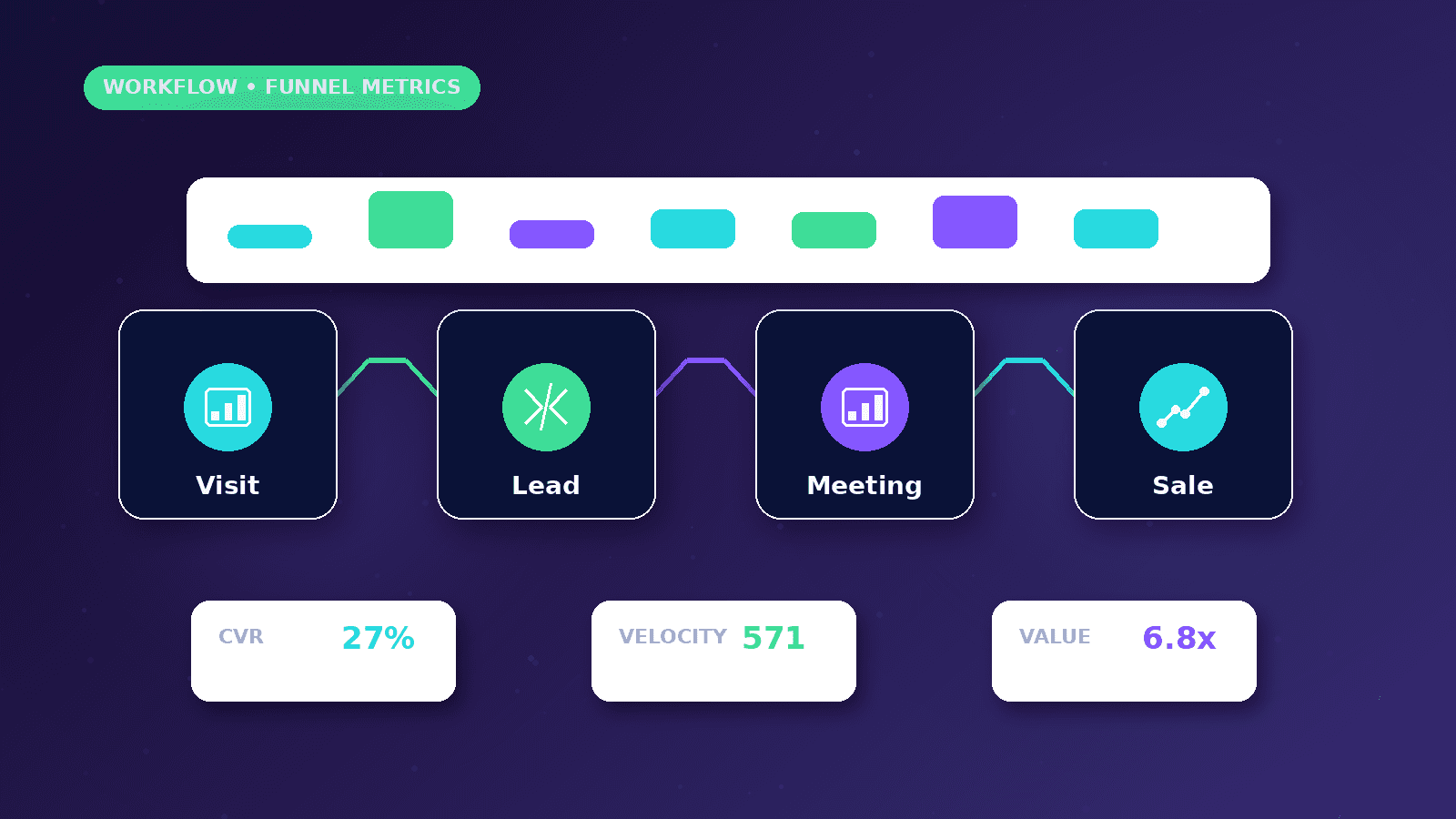
The fourth metric is pipeline movement. Leads should move through stages such as cold, warm, hot, booked, converted, and lost. The dashboard should show where deals slow down.
CurrentReach AI is built around these metrics so businesses can connect AI outreach, CRM automation, n8n workflows, and analytics into one sales operating system.


Why AI sales funnel dashboard matters now
AI Sales Funnel Dashboard Metrics: Track Leads, Emails, Replies, Calls, and Revenue is not just a technology topic. It is a revenue operations topic. Agencies, consultants, SaaS teams, and automation experts are under pressure to find better leads, respond faster, personalize outreach, and prove that campaigns are creating real conversations. A simple website or spreadsheet cannot manage that process at scale. A serious system needs lead capture, clean CRM fields, AI-assisted email generation, campaign tracking, reply visibility, and booked-call attribution. When AI sales funnel dashboard is designed correctly, it reduces manual follow-up and gives the business owner a clear view of which prospects are cold, warm, hot, or ready for a consultation.
The problem with manual outreach
Manual outreach often starts with good energy but breaks down quickly. Leads are collected in one place, email drafts sit somewhere else, follow-up notes live in an inbox, and campaign results are not connected to booked calls. This creates confusion for teams and weak trust for clients. If a business is trying to sell automation services, CRM setup, SaaS development, email marketing, or web development, the outreach system itself must look professional. A prospect should feel that the company understands operations, sales flow, and reliable execution. That is why sales funnel metrics and reply rate dashboard should be connected inside one workflow rather than treated as separate tools.
What a modern outreach stack includes
A modern outreach stack starts with a Lead CRM. Every record should include name, email, company, industry, source, status, score, notes, email sent, reply received, and booking status. The next layer is a campaign builder where leads are grouped around a specific offer and audience. The AI email generator should use the lead context to create a relevant subject line and body, not a robotic template. Then the n8n workflow trigger can send clean JSON to Gmail, Google Sheets, CRMs, analytics tools, and calendar systems. Finally, reply tracking and pipeline analytics show whether the campaign is creating warm leads and sales opportunities.
How AI should be used
AI should improve quality, not replace judgment. The best use of AI in outreach is to help understand the lead context, summarize the business problem, draft concise copy, and suggest a natural call to action. A good cold email does not need to sound dramatic. It should show relevance, explain a useful business outcome, and ask for a low-pressure next step such as a 15-minute consultation. For AI sales funnel dashboard, the most important rule is that every message must feel connected to the recipient. That means using the company, industry, possible pain point, and the sender’s offer carefully.
Where n8n fits into the workflow
n8n is valuable because it connects tools without forcing every business into one platform. A CurrentReach AI workflow can send campaign data into n8n, generate or receive the email subject and body, send through Gmail, update Google Sheets, notify the owner, and mark Email Sent after success. The same structure can support reply tracking and calendar booking tracking later. The important production rule is simple: every workflow must pass clean JSON. Gmail must always receive to, subject, and body. Sheet updates should happen only after successful sends, and errors should be visible instead of hidden.
How this helps agencies and consultants
Agencies and consultants need a system that can be sold as a client outcome, not only as internal software. A polished outreach automation platform helps position the business as serious, organized, and technically capable. When prospects visit the website, they should understand the offer quickly: lead CRM, AI email generator, campaign builder, n8n workflow trigger, reply tracking, pipeline analytics, client workspace, Stripe billing, webhook/API integration, and calendar booking tracking. This makes the website more credible for international clients because it explains both the business value and the technical delivery.
How to measure success
Success should not be measured only by the number of emails sent. Better metrics include fresh leads captured, emails sent successfully, reply rate, warm leads, hot leads, booked consultations, campaign conversion, and pipeline value. These metrics help teams improve the offer, subject lines, targeting, follow-up timing, and landing page content. If a campaign sends many emails but creates no replies or booked calls, the system should make that clear. If a smaller campaign creates strong replies, the team should be able to study why it worked and repeat the pattern.
SEO and client acquisition angle
For organic growth, content should answer the questions that potential clients search before they buy. Topics like AI sales funnel dashboard, sales funnel metrics, reply rate dashboard, n8n workflow automation, cold email automation, lead CRM, reply tracking, and booked-call tracking are useful because they match real business problems. The article should explain the problem, show the process, describe the tools, and give a practical next step. This is better than keyword stuffing. Search engines and human readers both reward content that is specific, clear, and genuinely helpful.
Implementation checklist
A production-ready implementation should include a professional public website, a clear contact form, a reliable backend API, MongoDB storage, authentication, lead CRUD, campaign CRUD, AI email generation, n8n webhook integration, Stripe-ready billing, privacy and terms pages, sitemap, robots file, and useful blog content. The contact form should save inquiries, not only open an email link. Service pages should explain each offer in detail. Blog pages should support organic search. The dashboard should help users add leads, create campaigns, trigger automation, and track outcomes.
Common mistakes to avoid
The biggest mistake is launching automation before the offer is clear. If the business does not know who it helps, what pain it solves, and what action the prospect should take, automation only makes confusion faster. Another mistake is sending emails without tracking what happens afterward. Email Sent, Reply Received, Warm Lead, Hot Lead, and Booked Call fields are simple, but they create the feedback loop needed for better decisions. A third mistake is building a beautiful website with no conversion path. International clients need clear proof, clear services, clear contact details, and a working form that confirms their inquiry was received.
What international clients expect
International clients usually compare multiple providers before reaching out. They look for a professional brand, clear positioning, service depth, proof that the team understands modern tools, and an easy way to start a conversation. They do not want vague claims. They want to see how the system works, which integrations are supported, what outcomes are tracked, and how the project can begin. A site that explains AI sales funnel dashboard, sales funnel metrics, reply rate dashboard, n8n automation, Stripe billing, and booked-call tracking gives clients more confidence because it shows both strategy and implementation ability.
Final recommendation
If you are building a business around AI automation, email marketing, sales systems, CRM setup, SaaS dashboards, or web development, start with a simple but professional client acquisition system. Build trust on the website. Capture inquiries through a working form. Use clear service pages. Publish useful long-form articles. Connect the backend to a real database. Then automate outreach with n8n and track the pipeline carefully. CurrentReach AI is designed around that exact path: fresh leads, personalized outreach, clean automation, reply tracking, and booked conversations.
FAQs
What should an AI sales dashboard track?
Lead source, emails sent, reply rate, warm leads, hot leads, booked calls, conversions, and campaign performance.
Is email volume the most important metric?
No. Replies, qualified leads, booked calls, and conversions are more meaningful than send volume.
How does a dashboard improve sales automation?
It shows what is working, where follow-up is stuck, and which campaigns create real opportunities.
Need this implemented?
CurrentReach AI builds the CRM, automation workflow, email system, and reporting layer for businesses that want a cleaner outreach engine.
Book consultation